Disclosure: This article is for educational purposes only and is not financial or investment advice. Investing involves risk, including possible loss of principal. This post may contain affiliate links. Always do your own research or consult a licensed professional.
One of the biggest myths about investing is that you need thousands of dollars to begin. You don't. Thanks to fractional shares, no-minimum brokerages, and automatic round-up apps, you can start investing with $5, $10, or whatever you can spare this week. The amount you start with matters far less than the habit of starting.
This guide shows exactly how to start investing with little money, where to put it, and how small contributions quietly add up over time.
Why starting small still works
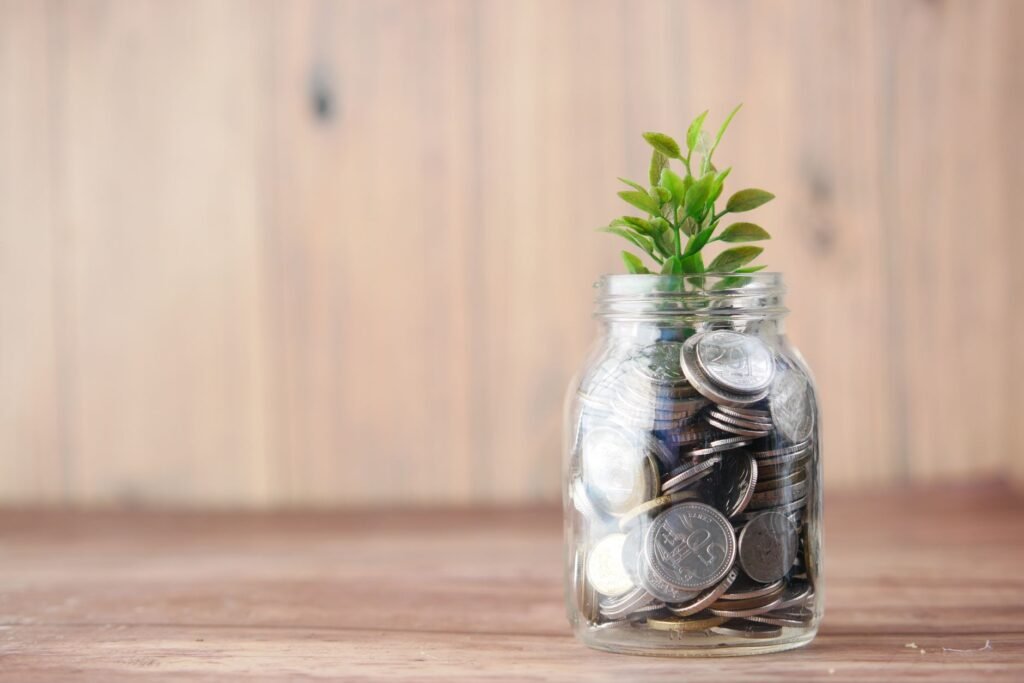
It's tempting to wait until you "have enough." But waiting has a real cost. Because of compound growth, the earlier your money goes to work, the more time it has to multiply. A small amount invested today can outgrow a larger amount invested years from now.
Just as importantly, starting small builds the habit and the confidence. Once you've made your first $20 investment and watched how it behaves, the whole process stops feeling mysterious. You learn by doing — with low stakes — and then scale up as your income grows. The goal right now isn't to get rich; it's to become an investor. For the bigger picture, see our pillar guide on investing for beginners.
Tools that make small-dollar investing possible
A few modern features have made tiny investments practical:
- Fractional shares. Instead of buying a whole share that might cost hundreds of dollars, you buy a slice. Want $10 of a fund priced at $400? You get 1/40th of a share. Your money is fully invested, no leftovers.
- No account minimums. Many apps and brokerages let you open and fund an account with no minimum balance.
- Automatic round-ups. Some apps round each purchase up to the nearest dollar and invest the spare change. Buy a $3.40 coffee, and $0.60 quietly gets invested.
- Commission-free trades. Most major brokerages no longer charge a fee to buy or sell stocks and ETFs, so small trades aren't eaten alive by costs.
You can compare beginner-friendly platforms in our roundup of the best investment apps for beginners.
A simple step-by-step plan to start with little money
- Decide on a small, sustainable amount. Pick a number you won't miss — $10, $25, or $50 a month. Consistency beats size.
- Open a beginner-friendly account. A brokerage app or a Roth IRA (for retirement) works well. Setup takes about 15 minutes.
- Turn on automatic contributions. Schedule your small amount to transfer and invest on the same day each month so you never have to think about it.
- Buy a broad, low-cost index fund. This gives you instant diversification across hundreds of companies with a single purchase. Learn why in our guide to index funds for beginners.
- Leave it alone and increase over time. As raises and windfalls come, bump up your contribution. Future you will be grateful.
This approach of investing a fixed amount on a regular schedule has a name — dollar-cost averaging — and it's one of the most beginner-friendly strategies there is.
How small amounts grow over time
Small contributions feel insignificant in the moment, which is exactly why people give up too early. The math tells a different story.
Imagine investing $50 a month. Over 30 years you'd contribute $18,000 of your own money. At a 7% average annual return, that account could grow to roughly $58,000 — more than triple your contributions, thanks to compounding. Bump it to $100 a month and the same period could produce well over $110,000.
These are illustrations, not promises — real returns vary year to year and are never guaranteed. But the principle holds: time in the market is the small investor's greatest advantage. The less you start with, the more you need time on your side, which is the best reason to begin now.
Mistakes to avoid when investing small amounts
- Chasing big wins. With a small balance, it's tempting to gamble on a "moonshot" stock to grow fast. This is how beginners lose their starter capital. Boring and diversified wins.
- Paying high fees. A 2% fee barely registers on $50 but compounds into thousands lost over decades. Stick to low-cost funds and fee-free platforms.
- Stopping during downturns. When the market drops, small investors often panic and quit. But contributing during dips means you buy more shares at lower prices — a feature, not a bug.
- Waiting for "enough." There's no magic threshold. The right amount to start with is whatever you have today.
Frequently asked questions
Can I really start investing with just $5 or $10?
Yes. With fractional shares and no-minimum apps, you can invest just a few dollars and have it fully working for you. Many people start with exactly these amounts to build the habit.
Is it worth investing if I can only put in a little?
Absolutely. Small, consistent contributions compound over time, and starting early gives your money more years to grow. The habit you build is often worth more than the initial dollars.
What's the best thing to invest small amounts in?
A low-cost, broadly diversified index fund or ETF is a common choice for beginners because it spreads risk automatically and doesn't require picking individual stocks.
Should I pay off debt before investing small amounts?
High-interest debt, like credit cards, usually deserves priority because paying it off is a guaranteed return. For retirement accounts with employer matching, though, it can make sense to contribute enough to get the match first.
How often should I add money?
Monthly is a popular, manageable rhythm, but weekly or per-paycheck works too. The key is automating it so investing happens consistently without relying on willpower.
The bottom line
You don't need a fortune to become an investor — you need to start. With fractional shares and beginner-friendly apps, a few dollars is enough to get your money working today. Pick a small amount you can sustain, automate it into a low-cost index fund, and let time and compounding do the heavy lifting. Start tiny, stay consistent, and grow from there. For the full roadmap, return to our guide on investing for beginners.